If you drive an all-wheel-drive vehicle, you may have heard this before:
"You need to replace all four tires."
Sometimes that advice is correct. Sometimes it is oversold. The real answer depends on tire size, tread depth, tire model, circumference, wear pattern, and how close the remaining tires are to the new ones.
The goal is not just to sell four tires. The goal is to keep all four tires rolling at a similar speed with similar grip.
Why AWD Vehicles Are Sensitive To Tire Differences
An AWD system is designed to manage power between the front and rear wheels. It expects the tires to be reasonably matched.
When one tire is taller than the others, it travels farther with each rotation. A worn tire is slightly shorter than a new tire because rubber has been removed from the tread.
That means a new tire and a worn tire can rotate at different speeds even if the sidewall size says they are the same.
On an AWD vehicle, that difference can make the drivetrain work harder than it should. The system may think one axle is slipping, or it may constantly compensate for a rolling difference that is not really road slip.
Over time, too much mismatch can stress AWD components.
Tread Depth Changes Tire Height
A lot of people think tire size is only what is written on the sidewall, such as 225/60R18.
That is only the starting point.
As a tire wears, the total height of the tire changes. A tire with 10/32 tread is not the same rolling height as the same tire worn down to 4/32.
This is why tread depth matters.
If the front tires are worn because the vehicle was never rotated, and the rear tires still have more tread, you already have a height difference. That same kind of difference is what people worry about when replacing only one or two tires on an AWD vehicle.
It Is Not Only About Height
Circumference matters, but grip matters too.
The ideal setup is all four tires being the same:
- Same size
- Same brand
- Same model
- Similar tread depth
- Similar tread pattern
- Similar winter/all-season/all-weather category
- Similar road friction
If you install two brand new tires on one axle and leave two older tires on the other axle, the vehicle may have two tires with better grip and two tires with less grip. On wet, icy, or snowy roads, that difference can affect stability.
Can You Replace Only Two Tires?
Yes, sometimes.
Replacing only two tires can be fine when the remaining two tires are close enough in tread depth, condition, and performance characteristics.
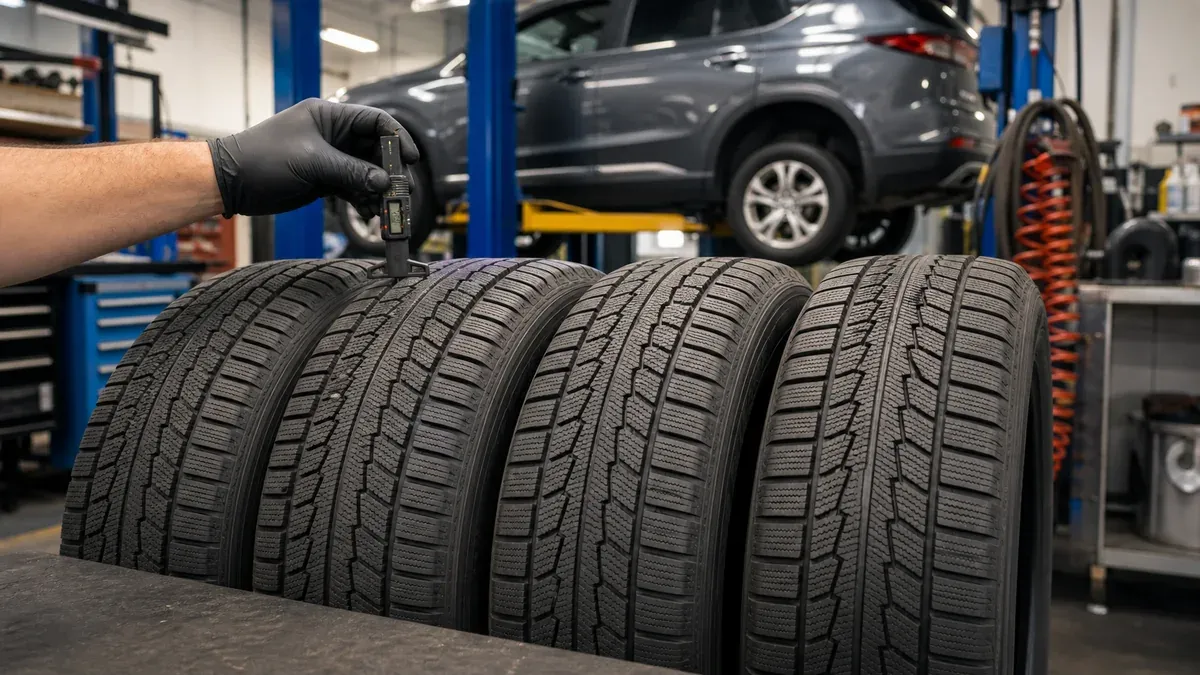
Before doing that, the tires should be inspected properly.
We look at:
- Tread depth across all four tires
- Whether the tires are the same brand and model
- Whether the tires have the same load and speed rating
- Whether one tire is cupped, chopped, cracked, or unevenly worn
- Whether the vehicle is AWD, 4WD, FWD, or RWD
- Whether the owner plans to replace the other pair soon
- Whether the vehicle manufacturer has a strict matching requirement
If the remaining pair is too worn, too different, or damaged, replacing only two may not be the right advice.
Why Shops Recommend Four Tires
Shops often recommend four tires on AWD vehicles because it is the safest general recommendation.
It removes the matching problem. It gives the vehicle four tires with the same tread depth and same grip. It avoids drivetrain concerns. It also avoids the customer coming back with vibration, traction control behavior, or uneven handling.
That does not mean every AWD vehicle always needs four tires every time. It means the shop needs to inspect the full set before giving a responsible answer.
What About One Damaged Tire?
If one tire is damaged and the other three are nearly new, replacing one tire with the same brand, model, and size may be fine.
If the other three tires are half-worn, the new tire may be too tall. In some cases, a tire can be shaved or matched to the existing tread depth, but that is not always available locally or practical for every customer.
This is why measuring matters.
Rotation Prevents This Problem
Many AWD tire problems start because the tires were not rotated.
Front tires often wear differently than rear tires because of steering, braking, weight transfer, alignment, and drivetrain layout. If the tires are never rotated, one axle can end up much more worn than the other.
Then when one tire fails, the whole set becomes harder to match.
Regular rotation helps keep tread depth closer across all four tires, which protects the vehicle and gives you more options later.
Final Answer
You do not always need four new tires on an AWD vehicle, but you do need four tires that are close enough in rolling circumference and road grip.
Replacing only two can be fine if the other two are close in tread depth, condition, size, and tire characteristics. But if the difference is too large, four tires may be the better recommendation.
At YEGTires.com, we prefer to measure and inspect before giving blanket advice. The goal is simple: protect the AWD system, keep the vehicle stable, and avoid selling tires the customer does not actually need.