This is one of the most practical winter tire questions:
Should you buy a second set of rims, or should you mount and balance your winter and summer tires on the same rims each season?
The honest answer is that it depends on convenience, cosmetics, budget, storage, and how disciplined you are with tire maintenance.
Both options can work.
Option 1: Buy Winter Tires On Their Own Rims
Buying winter tires mounted on their own rims is convenient.
When winter comes, the wheel and tire assemblies can be swapped onto the vehicle without removing the tire from the rim. In spring, the summer set goes back on.
This can reduce labour time during seasonal swaps and makes it easier for some people to change wheels at home.
It also protects nicer summer wheels from winter salt, gravel, potholes, and curb rash. Many customers use black steel rims or dedicated winter alloy wheels for winter, then keep their nicer wheels for summer.
Why People Like Dedicated Rims
Dedicated rims are popular because:
- Seasonal swaps can be faster
- You avoid mounting and dismounting the tire every season
- You can protect expensive factory or aftermarket wheels
- You can choose a winter look or a more durable setup
- It may reduce long-term changeover labour costs
For many drivers, the convenience alone is worth it.
The Downside Of Having Tires On Rims
The downside is that some people start treating wheel swaps like they need no service.
If the tires are already on rims, it is tempting to change them at home and skip inspection, rotation, balancing, and TPMS programming.
That can create problems over time.
Wheels can lose balance. Tires wear. Weights can fall off. Potholes can bend rims. Tire pressure changes with temperature. TPMS sensors may need service or programming. The tread may be wearing unevenly without anyone noticing.
A wheel swap is not just about bolting four wheels on.
Option 2: Seasonal Changeovers On The Same Rims
A seasonal changeover means removing one set of tires from the rims and mounting the other set.
This takes more labour, but it also gives the shop a chance to inspect and service the setup properly.
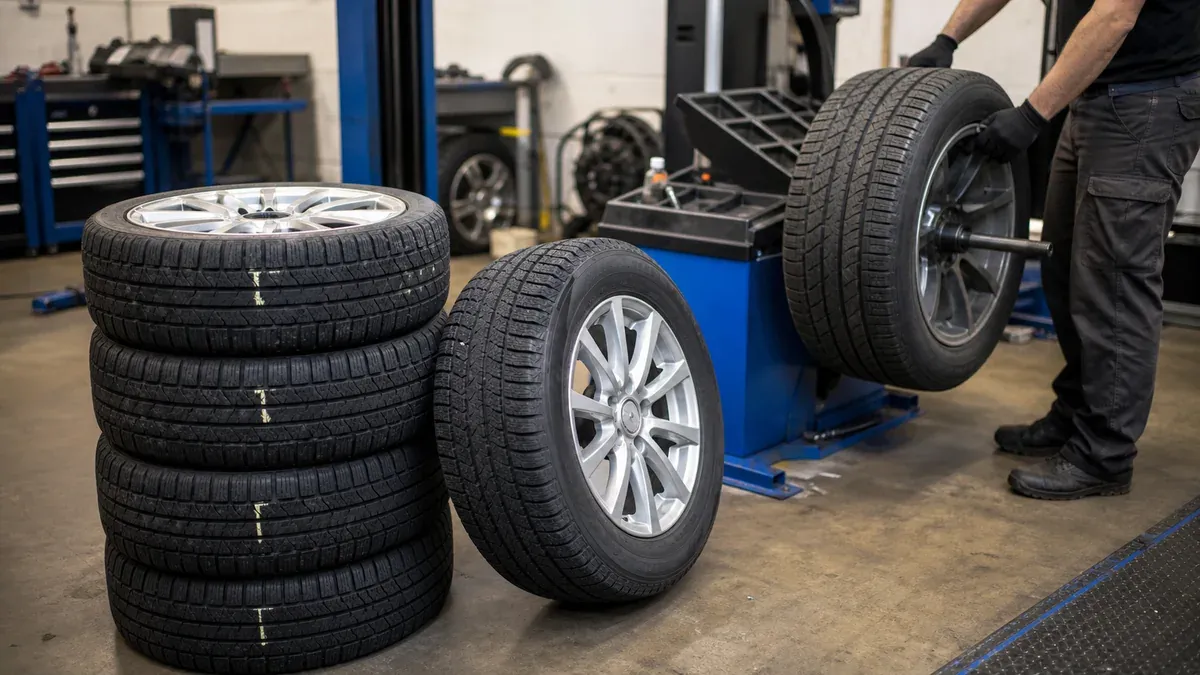
At YEGTires.com, when we do a changeover, we mark and chalk the tires, rotate them as appropriate, balance them every time, and program TPMS when needed.
That matters.
The tires are not just being moved around. They are being checked, mounted, balanced, and positioned properly for the next season.
Balancing Every Time Is A Real Benefit
Balancing matters because tires and wheels do not stay perfect forever.
Tires wear. Rubber material comes off the tread. Wheels hit potholes. Weights can shift or fall off. Small imbalances can become vibration at highway speed.
When a tire is mounted on a rim during a seasonal changeover, it gets balanced as part of the process. That helps keep the ride smooth and protects the tire from irregular wear.
With a mounted winter set on separate rims, balancing can be forgotten unless the customer requests it or the shop checks it.
Rotation Matters Too
Tires usually do not wear evenly front to rear.
Front tires handle steering forces. Depending on the vehicle, they may also handle more braking and drive torque. If tires are not rotated, one axle may wear faster than the other.
During a proper seasonal service, the tires are marked so their previous positions are known. That allows the next installation to include rotation where appropriate.
TPMS Can Be Part Of The Decision
Some vehicles use tire pressure monitoring sensors inside each wheel.
If you buy a second set of rims, you may need a second set of TPMS sensors. Some vehicles relearn automatically. Others need programming. Some customers choose to run without sensors, but that can leave a warning light on the dash and remove a useful safety feature.
With seasonal changeovers on one set of rims, the same sensors stay with the wheels.
So Which Option Is Better?
Buy rims if you value convenience, want to protect your summer wheels, or want a dedicated winter look.
Choose seasonal changeovers if you want the tires balanced every time, want the shop inspecting the setup closely each season, or do not want to buy a second set of rims and TPMS sensors.
There is no one-size-fits-all answer.
Final Answer
Buying rims with winter tires is mostly a matter of convenience and cosmetics.
Separate rims can make seasonal swaps faster and protect your nicer wheels. Seasonal changeovers cost more each time, but they include important service steps like marking, rotation, balancing, inspection, and TPMS programming when needed.
At YEGTires.com, we help customers choose based on how they drive, where they store tires, what wheels they care about, and whether they want maximum convenience or maximum seasonal service.