Tire rotation is important, but it is not the whole story.
Rotating tires helps move each tire to a different position on the vehicle so the set wears more evenly. That matters because front and rear tires do different jobs. Front tires steer. Drive tires handle torque. Braking and suspension geometry also affect wear.
But rotation does not rebalance a tire. It does not fix vibration. It does not correct a bent rim. It does not solve cupping that already started. It does not replace inspection.
Rotation is good maintenance. It is not complete tire service by itself.
Why Tire Rotation Gets Pushed So Hard
The tire industry talks about rotation all the time because it is simple, easy to explain, and often offered as a free perk.
Free rotation also brings customers back into the shop. That is not a bad thing. It gives the shop a chance to inspect tread depth, check wear patterns, look for damage, and identify problems before the tire is ruined.
But customers should understand that rotation alone is not magic.
A tire can be rotated perfectly and still be out of balance.
Tires Wear And Balance Changes
A tire and wheel assembly is balanced when weight is added to make it rotate smoothly.
Over time, things change:
- Rubber wears off the tread
- Wheel weights can fall off
- Potholes can bend wheels
- Tires can develop uneven wear
- Curb impacts can shift things
- Seasonal temperature changes affect pressure
- Suspension wear can change how the tire contacts the road
As material wears away, the tire may no longer spin the same way it did when it was first balanced.
That is why a tire that felt smooth last season can vibrate this season.
What Happens When Tires Are Out Of Balance?
An out-of-balance tire can cause vibration, usually at highway speed.
That vibration is not just annoying. It means the tire and wheel assembly is not rotating smoothly. Over time, that can contribute to irregular wear and extra stress on steering and suspension components.
If ignored long enough, irregular wear can become permanent.
What Is Tire Cupping?
Cupping, sometimes called scalloping, is an uneven wear pattern where parts of the tread wear in dips or patches.
It can be caused by several issues, including worn suspension, poor alignment, incorrect pressure, imbalance, or lack of proper tire maintenance.
Once a tire is badly cupped, balancing may reduce vibration, but it may not fully repair the tire. The tread is already physically uneven.
That is why catching imbalance and irregular wear early matters.
Rotation Helps, But Balancing Completes The Service
Rotation changes where the tire sits on the vehicle.
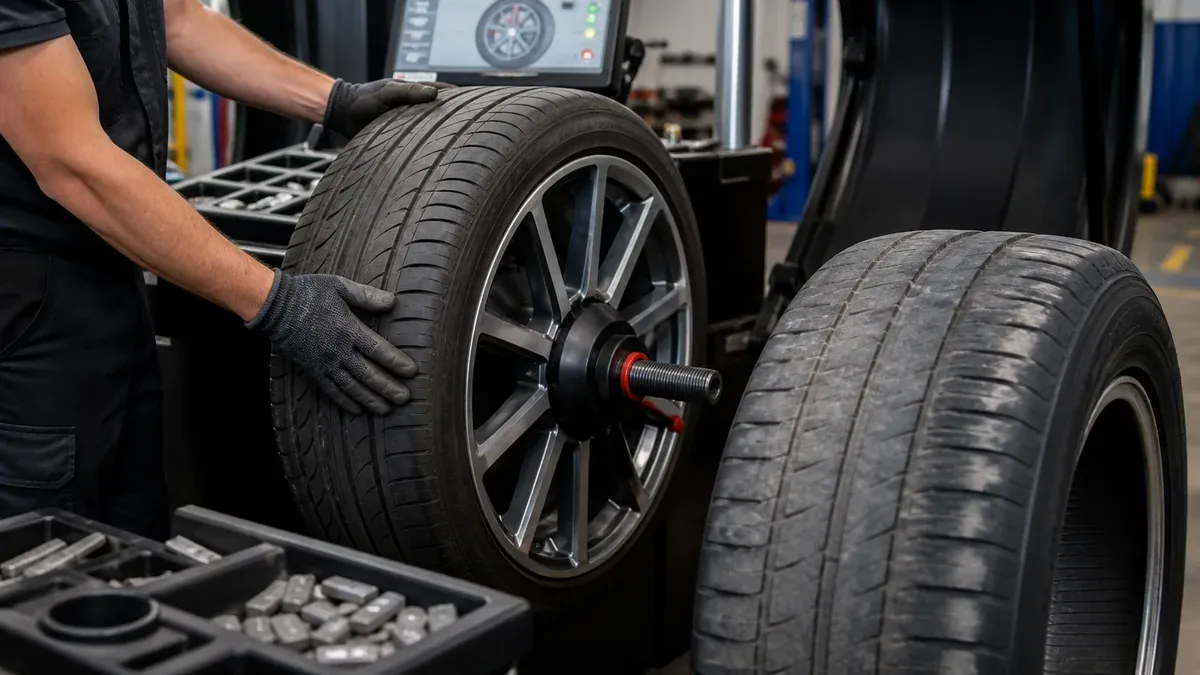
Balancing checks whether the tire and wheel assembly spins smoothly.
They solve different problems.
If a shop rotates tires without checking balance, the customer may still have vibration. If a shop balances tires but never rotates them, the set may wear unevenly front to rear.
Good tire maintenance uses both at the right time.
Why Seasonal Changeovers Are Useful
Seasonal changeovers are a built-in opportunity to service the tires properly.
At YEGTires.com, when we perform a seasonal changeover, we mark and chalk the tires, rotate them where appropriate, balance them every time, inspect tread condition, and program TPMS when needed.
That means the tires are not just being swapped. They are being checked and corrected before the next season.
This is especially useful in Edmonton because tires take a beating from potholes, cold temperatures, winter ruts, gravel, road salt, and seasonal storage.
Do I Need To Rotate My Tires?
Yes, most vehicles benefit from tire rotation.
Rotation helps even out tread wear and can extend the life of the set. It is especially important on front-wheel-drive vehicles, many AWD vehicles, and vehicles where front and rear wear rates are different.
There are exceptions. Some vehicles have staggered tire sizes, directional tires, or special manufacturer instructions. In those cases, the correct rotation pattern may be limited or rotation may not be possible in the usual way.
The owner's manual is the starting point, but actual tread wear should also be inspected.
Final Answer
Tire rotation is important, but it is not enough by itself.
You still need inspection and balancing. Tires lose material, wheels take impacts, weights can fall off, and imbalance can lead to vibration and irregular wear. Once cupping or uneven wear becomes severe, the tire may be permanently damaged.
That is why seasonal changeovers are valuable: the tires get marked, rotated, balanced, inspected, and prepared for the next season instead of just being moved around.